
Foundations and groundworks on Irish clay and peat
For a typical 30 m² Irish extension footprint, trench strip foundations on firm glacial clay cost €9,000 to €16,000, engineer-designed reinforced concrete rafts on soft clay or shallow peat cost €14,500 to €24,000, and piled ground beams on deep bog or estuarine silt cost €22,000 to €38,000.
Why trial holes decide substructure cost, how strip, raft and piled footings compare, and what builders check on drains and radon.
Free, no obligation. One local builder prices it, not five.
- €9,000–€16,000strip footings (30 m² clay)
- €14,500–€24,000reinforced raft (soft ground)
- €22,000–€38,000piled ground beams (peat/silt)
- 900–1,200 mmtypical Irish strip trench depth
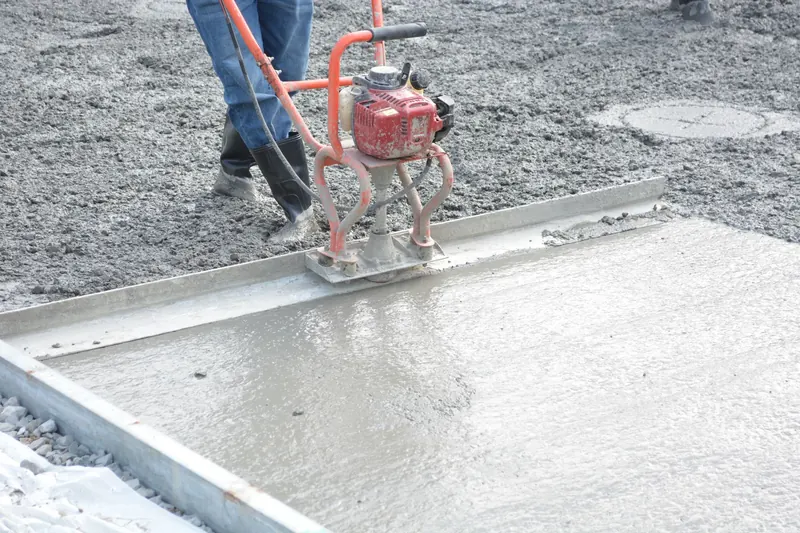
Three Irish foundation systems compared
Irish subsoil changes dramatically even across the same town. Glacial boulder clay across much of Dublin, Cork and Meath holds standard trench strip footings cleanly at 900 mm depth. Midland peat lenses, raised bog margins, coastal alluvial silt and old backfilled gardens compress under masonry load and crack walls unless an engineer specifies a raft or piles.
Trench strip footing
- 30 m² typical cost
- €9,000 to €16,000
- Irish ground profile
- Firm glacial boulder clay or dense gravel
- Structural detail
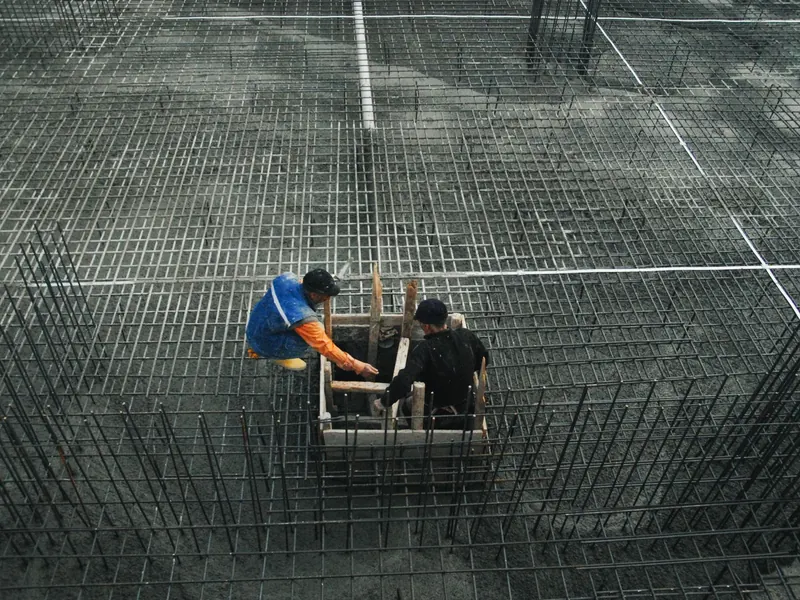
- 600–900 mm wide poured C25/30 concrete, rising blocks, compacted hardcore & slab
Reinforced concrete raft
- 30 m² typical cost
- €14,500 to €24,000
- Irish ground profile
- Soft clay, shallow peat (<1.5 m) or variable fill
- Structural detail
- Engineered thickened-edge ground slab with A393 steel mesh layers on compacted Clause 804
Piled foundation & ground beams
- 30 m² typical cost
- €22,000 to €38,000
- Irish ground profile
- Deep peat, bog margins or estuarine river silt
- Structural detail
- Mini-driven or bored concrete piles seated on rock/firm strata linked by reinforced ring beams
Price my extension
Four quick taps and our builder m² guide shows before we ask for a phone number. One local builder rings you, not five.
A single-storey rear extension, 25 to 40 m², builder's finish (drawings ready): €59,000 to €82,000, incl. 13.5% VAT.
How the m² build guide is worked out
The range reflects going Irish extension builder tender rates incl. 13.5% VAT for that layout, floor area and finish stage. Builder's finish covers substructure, strip footings, walls, RSJ steelwork, roof, windows, external render, drylining, screed and first-fix plumbing and electrics. Full turnkey adds kitchen units, sanitaryware, tiling, flooring and decorating allowances. Dublin, Wicklow, Kildare and Meath carry an 8% regional adjustment for site access and labour. Piled foundations on peat, heavy box-frame steel, drain diversions and architect or engineer fees are confirmed separately after reviewing drawings or inspecting the site.
Radon barriers, drainage and existing-wall junctions
- Dig a trial hole beside the existing footing first. Checking bearing strata and existing foundation depth before tendering removes the biggest unknown contingency from a builder's quote.
- Divert foul sewers before pouring concrete. Building directly over a live clay foul pipe invites settlement fractures; relocating inspection chambers (AJs) outside the footprint adds €2,200 to €5,500 and keeps future rodding accessible.
- Radon barrier and sump in high-radon zones. Much of the west, south-east and midlands falls inside High Radon Areas on EPA maps, requiring a taped 400-micron radon membrane plus external sump pipe.
- Movement joint and stainless wall starters. New foundations settle slightly more than a 40-year-old house; vertical stainless wall-starter ties and a controlled movement detail stop hairline plaster cracking along the junction.
Related builder & stage guides
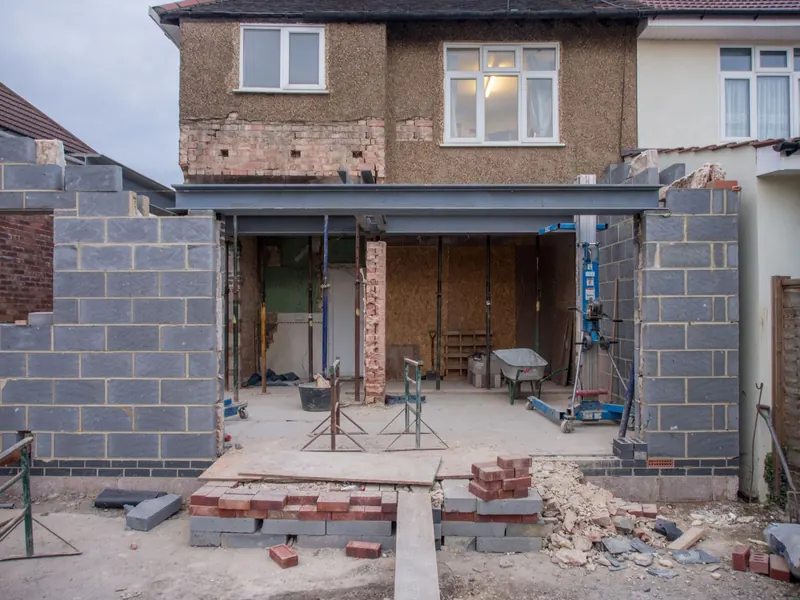 Steel RSJs & sign-offBox frames, padstones, temporary propping and structural certs.
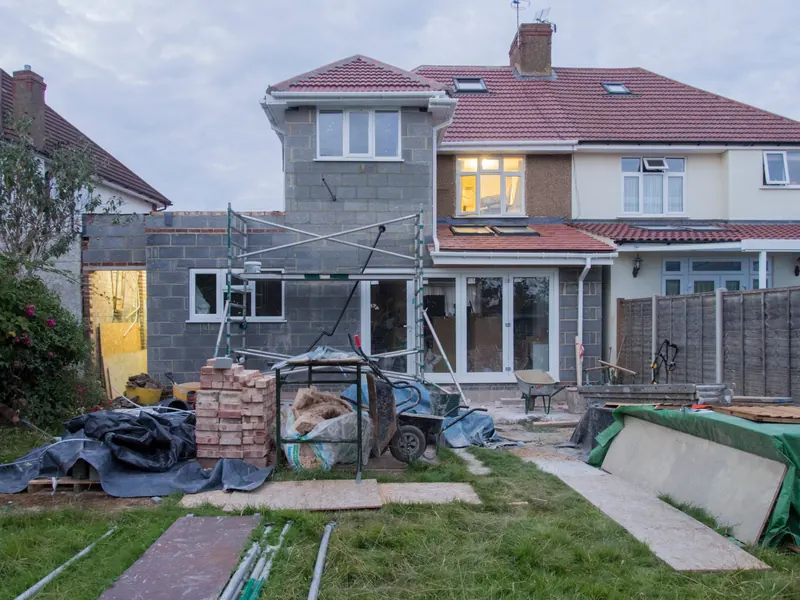 Build rates per m²Stage-by-stage Irish builder rates incl. 13.5% VAT and county weighting.
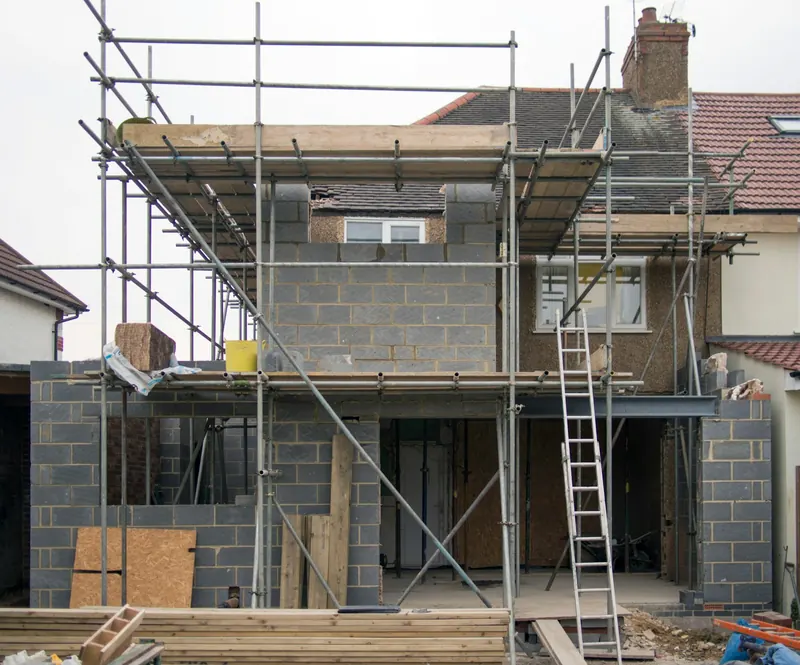 Build timelinesWeek-by-week 14 to 26 week construction stages and drying times.
 Two-storey extension builders50 to 80 m² stacked masonry builds, first-floor limits and BCAR.
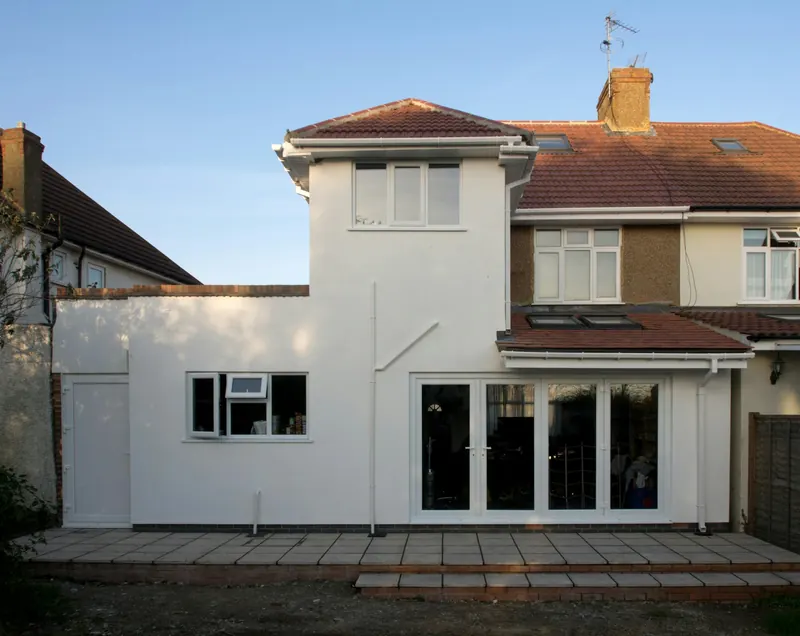
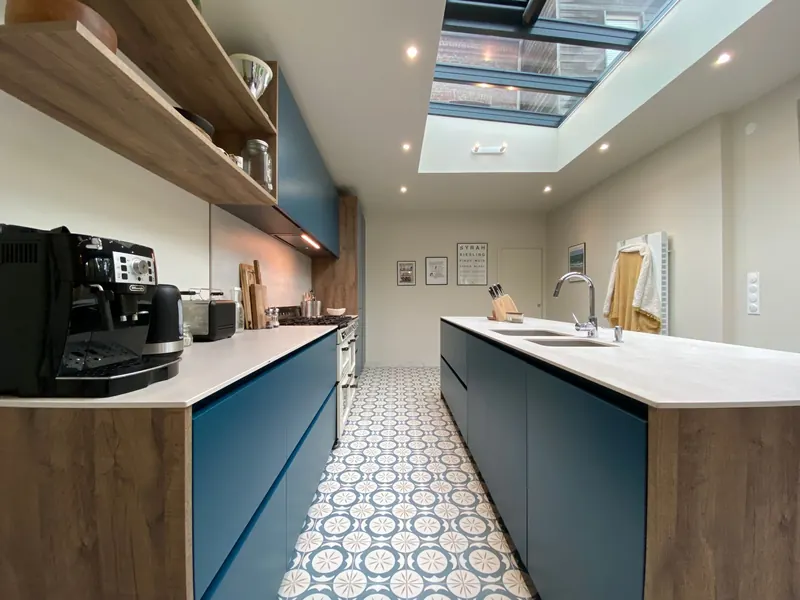 Single-storey rear builders25 to 40 m² rear kitchen builds, RSJ knock-throughs and m² rates.
 Limerick extension buildersEstuarine raft footings, Shannon corridor groundworks and build rates.
Common questions before you tender
How deep do extension foundations need to be in Ireland?
Minimum 750 mm to 900 mm on firm virgin boulder clay below topsoil and frost line, stepping deeper beside mature trees (shrinkable clay) or where made ground continues downwards.
How much does a raft foundation add over strip footings?
On a 30 m² extension, switching from standard strip footings (€9,000 to €16,000) to an engineer-designed reinforced raft (€14,500 to €24,000) typically adds €5,500 to €8,000.
What if my builder hits solid limestone rock during excavation?
Common in Galway, Clare and parts of Kilkenny and Cork: rock provides strong bearing so shallow stepped footings work well, though hiring a hydraulic rock breaker for service trenches and drains adds €1,200 to €3,000.
Do I need a soil test before building an extension?
For standard single-storey builds on known estate ground, a builder-dug trial hole inspected by a structural engineer is usually enough. On boggy rural sites or two-storey builds over soft silt, a formal geotechnical borehole prevents costly mid-build redesigns.
Every extension build page and technical guide
Extension build types
Construction stages & rules
See your m² build range before a builder rings
Pick the extension type, floor area and finish stage. When you want a written tender price, your outline goes to one local extension builder in your county.